
Maximise Fat Loss with HIIT Workouts
Have you ever found yourself staring at the mirror or stepping off the scale, asking yourself: HIIT For Fat Loss? Want to Lose Weight fast? What’s The Best Way? If you are tired of spending endless hours jogging on a treadmill with minimal results, you are certainly not alone. The fitness world is packed with conflicting advice, but science consistently points to High-Intensity Interval Training (HIIT) as one of the most efficient, time-saving, and effective methods to transform your body.
Whether you join a buzzing local studio for a guided session or prefer sweating it out in your living room, understanding how to leverage short bursts of intense exercise can revolutionise your results. Let’s dive into the science, the strategies, and the practical steps to maximise your fat loss using HIIT.

Outdoor workouts that fit real life — and actually feel enjoyable. HIIT
The Science of the Shred: How HIIT Melts Body Fat
When people ask, “how can i lose body fat efficiently?”, the answer almost always comes back to the way our bodies consume energy. HIIT involves alternating between short, explosive bursts of all-out effort and periods of low-intensity active recovery or complete rest.
The true magic of this training style lies in the afterburn effect. Often, fitness enthusiasts want to know: how many calories does hiit burn after workout? While the exact number varies depending on your body composition and effort level, the post-workout calorie burn can last anywhere from 12 to 24 hours. This phenomenon relies on the excessive post-exercise oxygen consumption benefits (EPOC). Because HIIT pushes your body so hard, it requires significantly more oxygen to recover, repair muscle tissue, and restore depleted energy reserves.
This oxygen deficit leads directly to a massive metabolic rate increase through high intensity training. Your metabolism remains elevated long after you have untied your trainers, turning your body into a fat-burning furnace while you work at your desk or watch television.
HIIT vs. Traditional Cardio: Which is Superior?
It is the ultimate fitness debate: hiit vs steady state cardio for belly fat. Low-Intensity Steady State (LISS) cardio—like a brisk walk or a light jog—burns a higher percentage of fat for fuel during the actual activity. However, HIIT burns far more total calories in a shorter amount of time, resulting in greater overall fat loss.
If you are just starting out, you might be considering hiit vs low intensity steady state for beginners. LISS is fantastic for building foundational aerobic endurance and conditioning your joints. However, once you have a baseline of fitness, transitioning to intervals is crucial if you want rapid aesthetic changes.
You might also encounter different variations of interval training, leading to questions about tabata vs hiit for weight loss results. Tabata is simply a highly structured, ultra-intense subcategory of HIIT. It mandates 20 seconds of maximum effort followed by exactly 10 seconds of rest, repeated for four minutes. While Tabata is phenomenal for pushing your cardiovascular limits, standard HIIT allows for more flexible work-to-rest intervals, which is generally more sustainable for longer, calorie-torching sessions.

Structuring Your Routine for Maximum Efficiency
If you want to see the scale drop, you cannot just exercise randomly; you need a strategic fitness schedule to lose weight. If you are wondering how to structure a hiit routine for beginners, the golden rule is to start conservatively and focus heavily on proper ratios.
To tap into your fat stores, you need to understand the work to rest ratios for optimal fat oxidation.
- Beginners: Start with a 1:3 or 1:2 ratio. For example, 20 seconds of intense work followed by 40 to 60 seconds of rest.
- Intermediate: Move to a 1:1 ratio, such as 30 seconds of work and 30 seconds of rest.
- Advanced: Push towards a 2:1 ratio (like Tabata) where the work time doubles the rest time.
To ensure you are actually doing HIIT and not just moderate cardio, you must monitor your intensity. You should be aiming for your maximum heart rate for effective fat burning during the work intervals—typically between 80% and 95% of your absolute maximum heart rate. If you can comfortably hold a conversation during a work interval, you are not pushing hard enough!
Choosing the Best Movements
Selecting the proper exercise to lose weight comes down to choosing compound movements. Compound exercises engage multiple large muscle groups simultaneously, requiring a massive amount of energy and driving up your heart rate instantly.
When building your hiit exercise routine, you do not need expensive gym equipment. In fact, a hiit training home workout can be just as brutal and effective as a gym session. Here are some of the best hiit exercises to lose weight at home:
- Burpees: The ultimate full-body calorie torcher that works your chest, core, and legs.
- Mountain Climbers: Fantastic for cardiovascular endurance and shredding the abdominal wall.
- Jump Squats: Explosive movements that build lower-body power and spike your heart rate.
- Kettlebell Swings (or Dumbbell Swings): Excellent for the posterior chain (glutes and hamstrings) and deep core engagement.
- High Knees: A simple, zero-equipment move that serves as a staple in many hiit workout exercises.

Breaking Plateaus and Targeting Stubborn Fat
Anyone who has tried to lean out knows the frustration of a plateau. You do great for three weeks, and suddenly the scale refuses to budge. Overcoming weight loss plateaus with intervals is a widely recommended strategy by elite trainers.
When your body adapts to a specific routine, it becomes highly efficient, meaning you burn fewer calories doing the same workout. Shaking up your routine with intense, unpredictable intervals forces your central nervous system and metabolic pathways to adapt all over again. This makes interval training for stubborn fat loss incredibly effective, especially for reaching areas like the lower abdomen and hips, which are notoriously resistant to mobilisation.
Important Considerations: Recovery, Hormones, and Muscle
As enthusiastic as you might be, more is not always better. A highly common question is: is daily hiit safe for weight loss? The resounding answer from sports scientists and trainers is no.
Doing high-intensity sessions every single day is a fast track to central nervous system burnout, joint injuries, and hormonal imbalances. Specifically, we have to look at the relationship between cortisol levels and high intensity interval training. Cortisol is a stress hormone. While an acute spike in cortisol during a workout is perfectly healthy and necessary for fat burning, chronically elevated cortisol from daily overtraining will cause your body to hold onto water and store visceral belly fat.
Aim for 2 to 4 HIIT sessions per week on non-consecutive days. On your off days, opt for active recovery like walking, yoga, or light cycling.
Another massive benefit of proper programming is muscle preservation during rapid fat loss. Traditional, long-duration steady-state cardio can sometimes lead to muscle catabolism (where the body breaks down muscle tissue for energy). Because HIIT workouts are incredibly brief—usually lasting only 15 to 30 minutes—and often utilize resistance-based plyometrics, they signal your body to hold onto your lean muscle mass while aggressively shedding the fat layer over it.
Classes vs. Solo Workouts: Finding Your Vibe
Sticking to a routine is ultimately about finding an environment you enjoy. Leveraging hiit for fitness doesn’t mean you have to do it alone in a dark garage.
Booking a spot in a local hiit class or signing up for premium hiit training classes offers distinct benefits. The group atmosphere, the booming music, and the watchful eye of an instructor can push you to hit that 90% maximum heart rate zone when your mind is telling you to quit. It takes the guesswork out of the programming; you simply show up and follow the coach’s lead.
On the flip side, performing your own hiit workouts gives you the ultimate flexibility. You can exercise on your own schedule, tailor your work-to-rest ratios exactly to your current fitness level, and choose the specific exercises that feel best for your body mechanics.
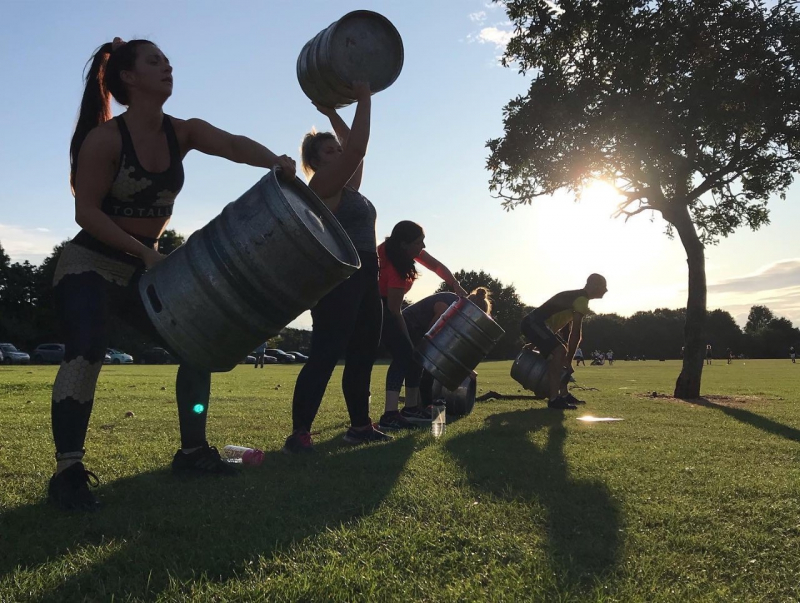
Outdoor group fitness class with people exercising together.
The Final Takeaway
If you want to shed pounds efficiently, improve your cardiovascular health, and sculpt a lean, athletic physique, high-intensity interval training is practically unparalleled. By embracing the post-exercise afterburn, choosing dynamic full-body exercises, respecting your body’s need for recovery, and managing your intervals smartly, you can totally bypass the endless hours on the treadmill.
Remember, the goal is not to exhaust yourself every single day. The goal is to work smarter, push your intensity limits briefly, and allow your body to do the heavy lifting of fat-burning while you rest. Lace up your shoes, set your interval timer, and get ready to experience the transformative power of HIIT.
Fancy joining Bootcamp UK? Your first 10 fitness classes are just £10, find your closest location today.

Claim your first 10 PAYG Bootcamp UK sessions for just £10! No commitment, no catch.