Circuit Training and Bootcamp Classes: How Boot Camp Fitness Really Works
Bootcamp classes and circuit training are two of the most efficient ways to get fitter, stronger and more confident without living in the gym. Both bootcamp and circuit training sessions combine strength and cardio so you get a full‑body workout in a short, focused block of time — and they can be scaled for complete beginners as well as fitter members.
Below, we’ll break down what each style actually is, why boot camp fitness works so well, and how to pick a class you’ll actually stick to.
What is circuit training?
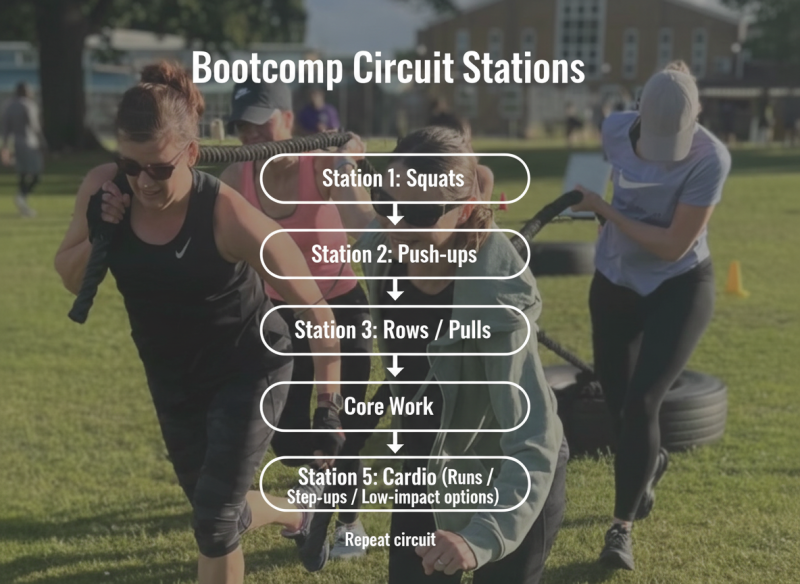
Circuit training is a workout where you move through a series of stations, performing a different exercise at each one. For example:
- Station 1: squats
- Station 2: push‑ups
- Station 3: rows or pulls
- Station 4: core work
- Station 5: cardio (runs, step‑ups, or low‑impact options)
You spend a set amount of time at each station (say 30–45 seconds), rest briefly, then rotate to the next. After completing the full circuit, you might repeat it 2–4 times.
Why this works:
- Your heart rate stays elevated (cardio benefit)
- Multiple muscle groups are trained (strength + endurance)
- Work and rest can be adjusted to suit different fitness levels
A coach can easily make circuit training beginner‑friendly by reducing time, lowering impact, or simplifying movements — or make it tougher by adding load, speed or complexity.
What are bootcamp classes?
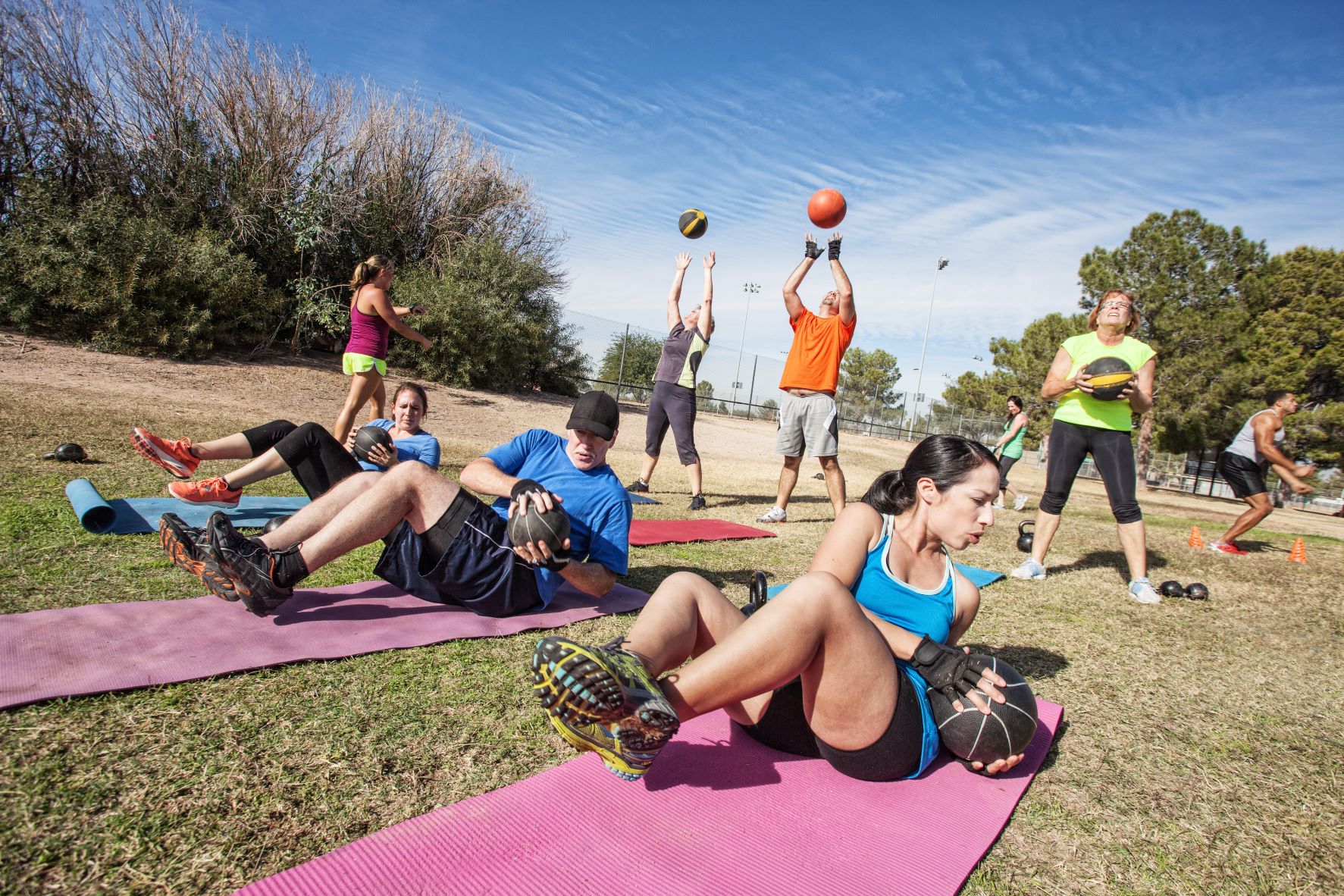
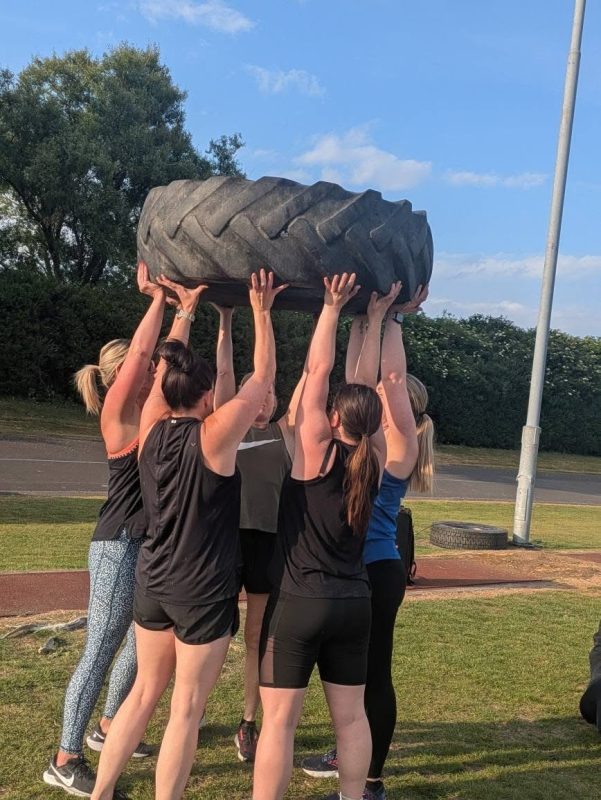
Bootcamp classes are usually group sessions that use a circuit‑style format, often outdoors in a park, but sometimes indoors in a studio. A typical bootcamp session includes:
- A guided warm‑up
- One or more circuit training blocks
- A cool‑down and stretch
In a good boot camp fitness session you might see:
- Bodyweight strength: squats, lunges, press‑ups, step‑ups
- Cardio drills: shuttles, short runs, fast walks, low‑impact moves
- Core and stability work: planks, dead bugs, carries, rotations
- Partner or team challenges for variety and fun
The key difference from just “doing exercises in a park” is structure and coaching. Proper bootcamp classes are planned, demonstrated and supervised, not just random exercises thrown together.
Why boot camp fitness is so effective
The combination of circuit training and coached bootcamp classes offers several advantages:
1. Big results in short sessions
Because bootcamp uses intervals and circuits, you get a lot done in 45–60 minutes:
- Cardio for heart health and calorie burn
- Strength work for muscle, posture and joint support
- Core training for stability and everyday movement
2. Built‑in progression
Well‑run bootcamp programs progress over time. You might see:
- Slightly longer work periods
- New exercises or equipment
- More rounds as your fitness improves
This planned progression is one of the reasons boot camp fitness often beats “random workouts” for long‑term results.

3. Coaching and technique
A big E‑E‑A‑T factor is expertise. In quality bootcamp classes, the coach:
- Demonstrates each movement clearly
- Checks your form and corrects it
- Offers regressions (easier) and progressions (harder)
That reduces injury risk and helps you get more from every rep.
“Am I fit enough for bootcamp or circuit training?”
This is the most common question — and the honest answer is: you don’t need to be fit to start, you get fit by starting.
Well‑designed bootcamp classes are mixed‑ability by default. In the same circuit, you might see:
- One person running, another fast‑walking
- One doing full press‑ups, another using an incline
- One using a heavier weight, another using bodyweight only
You work at your level, not the person next to you. The structure of circuit training makes this easy because everyone is doing the “same” station in a way that suits them.
If you’re brand‑new or returning after a break, tell the coach at the start. A good bootcamp coach will:
- Give you simpler versions of key movements
- Encourage more rest early on
- Focus on technique before intensity
Safety, injuries and age: what to look for
Any physical training carries risk, but boot camp fitness can be very safe when it’s coached well.
Signs of a good, safety‑minded class:
- Coach asks about injuries or medical issues before starting
- Warm‑up is structured, not rushed
- Movements are demonstrated slowly first
- Impact and range can be reduced if your joints don’t like something
- You’re told it’s OK to pause, regress, or skip any exercise that doesn’t feel right
If you have a medical condition or significant injury, get clearance from a healthcare professional first, then pass that info on to the coach.
Why group bootcamp classes help you stick with it
Most people don’t struggle with knowing they should exercise — they struggle with doing it consistently. Group bootcamp and circuit sessions help here:
- Fixed times = built‑in routine
- Other people expecting you = subtle accountability
- Shared effort = more fun than training alone
- Progress you can feel = motivation to keep going
It’s not unusual for people who “hate exercise” to discover they actually enjoy boot camp fitness once they’re in a supportive group and don’t have to plan anything themselves.

How to choose a good bootcamp or circuit training class
To get both results and safety, look for:
- Qualified coaches – recognised fitness qualification, ideally first‑aid trained and insured
- Clear structure – warm‑up, main block, cool‑down; not random chaos
- Options for all levels – you shouldn’t be forced into high‑impact drills if you’re not ready
- Positive atmosphere – encouragement, not humiliation
- Good reviews – real feedback from people like you, not just marketing claims
If possible, start with a trial or intro offer. After one or two bootcamp classes, you’ll know if the coaching style, group and format feel right.
The bottom line
Circuit training and boot camp fitness are popular for a reason: they’re simple, time‑efficient and genuinely effective when coached well. If you want full‑body training, real guidance and the motivation of a group — without having to design your own plan — a regular bootcamp or circuit‑style class can be one of the most practical choices you make for your health.